

Breast reduction, known medically as reduction mammoplasty, is a surgical procedure that lifts and reduces the size of the breasts. If you have chronic back and/or neck pain, have difficulty with physical activities due to the size of your breasts, and/or have noticed your bra strap digging into your shoulder, a breast reduction can provide symptom relief while creating a breast that is more proportional to your figure.
At Parikh Plastic Surgery Dr. Parikh takes special care to help you achieve symptom relief while optimizing your cosmetic results. If you would like to explore the benefits of breast reduction, schedule a consultation.

What causes breasts to grow too large
Breast tissue naturally reacts to hormones like estrogen and progesterone. These hormone levels rise during puberty, pregnancy, and your monthly cycle. In macromastia, breast tissue is extra sensitive to these normal hormone levels. So it keeps growing more than it should. This extra sensitivity often runs in families. It can also be triggered by puberty, pregnancy, weight gain, or certain medicines.
As breast tissue grows, the skin and the internal tissue that support your breast (called Cooper’s ligaments) get stretched. This is what causes breasts to sag over time. It’s also what pulls extra weight down onto your neck, shoulders, and back.
Large breasts vs. macromastia: the difference isn’t about bra size. It’s about symptoms. A woman with large, comfortable breasts does not have macromastia. A woman with smaller breasts but daily pain, skin problems, and posture trouble may have macromastia.

The Surgery Itself
Breast reduction surgery is done under general anesthesia. It’s usually an outpatient procedure, which means you go home the same day. Surgery typically takes three to four hours.
Before surgery, Dr. Parikh marks your breasts while you’re standing. This helps plan your new nipple position and how much tissue to remove. During surgery, he removes extra tissue, fat, and skin. Then he reshapes your breast and moves your nipple to its new spot.
The Wise pattern incision
For most moderate to large reductions, Dr. Parikh uses the Wise pattern incision. It’s also called the “anchor” incision, because of its shape. It has three parts. One is a circle around the areola (the darker skin around your nipple). One runs from the areola down to the crease under your breast. One runs along that crease.
Surgeons have used and improved this pattern for decades. That’s because it gives the most reliable results when a lot of skin and tissue need to come out. Tightening the skin in more than one direction gives you a lasting lift. It also gives you a natural breast shape. This matters most in larger reductions. The trade-off is a longer scar than some other techniques, but these scars sit along the areola and in the natural crease under your breast. That makes them easy to hide under clothing. They also fade and soften a lot over the first year.
Smaller reductions with less extra skin may use a different pattern instead, like a vertical (“lollipop”) or circular (“donut”) incision. Dr. Parikh will recommend the best pattern for your body during your consultation.
Blood supply to the nipple and areola
Your breast gets blood from three main places. The internal mammary artery is the biggest source. It feeds the inner part of your breast. The lateral thoracic artery feeds the upper and outer breast. Small branches called intercostal arteries feed the lower and outer breast. Feeling in your nipple mostly comes from one nerve. It branches off from nerves between your ribs.
During surgery, your nipple has to move to a higher spot. To keep it healthy, it stays connected to a “pedicle.” A pedicle is a strip of breast tissue. It carries blood vessels and nerves to the nipple. Dr. Parikh picks the right pedicle for you. He bases this on your breast size, shape, and how much tissue needs to come out. The various pedicles include:
- Inferior pedicle is most commonly used overall.
- Superior / superomedial pedicle often best for small to medium reductions but can be used for larger reductions and is Dr. Parikh’s pedicle of choice.
- Central pedicle keeps the tissue right under the nipple. Used based on your anatomy.
- Free nipple graft is seldom used and only for very large reductions, when the risk of poor blood flow to the nipple after reduction is high. Very reliable for healing, but you lose nipple feeling and the ability to breastfeed.
Keeping good blood flow to the nipple is one of the most important parts of this surgery. If blood flow is reduced, healing can be delayed. In rare cases, part of the nipple tissue can be lost. This is why Dr. Parikh chooses your pedicle carefully, based on your body.
The Side Breast Bulge
Patients with macromastia often have excess skin and fat on the side of their breast. People sometimes call this “side bra bulge.” This is not breast tissue. It’s fat on the side of your chest wall. A standard breast reduction only treats the breast itself.
Because your breast becomes smaller and sits higher after surgery, this side fat can actually look more noticeable afterward. It hasn’t grown, it’s just no longer hidden behind a larger breast.
To treat this area, Dr. Parikh performs liposuction of this area at the same time as your breast reduction. This blends your side chest smoothly into your new breast shape.
Since this side fat is not part of the breast, liposuction of this area during your surgery is not covered by insurance, even if your insurance covers the breast reduction. If this is something you are interested in doing during your breast reduction surgery we can discuss the cost and any added recovery time during your consultation.
Possible complications
Minor complications are fairly common after breast reduction and typically involve minor wound healing issues especially at the intersection of the incisions. Dr. Parikh will go over your personal risk factors in detail at your visit. Other complications include:
- Bleeding which can require additional surgery
- Fluid buildup (seroma) which usually goes away on its own or with simple drainage.
- Infection or slow healing is most common where incision lines meet. Smoking raises this risk a lot.
- Wound separation is usually minor and heals on its own.
- Scarring depends on your skin type. Scars are permanent but usually fade and soften. Sometimes scars become thick or raised.
- Changes in nipple sensation such as numbness or hypersensitivity. Both usually resolve but can be permanent in a very small number of patients.
- Asymmetries between the breasts can occur due to preexisting differences and/or differences in healing.
- Fat necrosis are firm spots that can occur especially with larger reductions.
- Partial or complete areola and nipple loss is a rare but real complication of breast reduction surgery and occurs when the blood supply to the nipple is compromised. Use of nicotine containing products or even second-hand nicotine exposure dramatically increases this risk.
Breastfeeding after breast reduction
Breastfeeding after breast reduction surgery is often a big concern for women who are planning to have children. Thus, I would like to spend some time going over the data on this topic. Breast reduction surgery can lower your chances of breastfeeding later. But most women can still breastfeed at least in part. A large 2023 review looked at 33 studies. It found that women who’ve had a breast reduction are about 3.5 times more likely to have trouble breastfeeding than women who haven’t. The overall success rate after surgery was about 62%. A newer 2026 review looked at 57 studies and over 380,000 patients. It backed up this finding. Keep in mind, however, that only 85% of women who have not had any breast surgery will be able to breast feed.
To best preserve your ability to breast feed, we can alter our surgical technique. If breast feeding is important to you, Dr. Parikh will likely advise using an inferior pedicle technique for your breast reduction surgery. There are drawbacks to this technique as well which Dr. Parikh will discuss with you during your consultation.
There are other factors that influence your ability to breast feed include the amount breast tissue that needs to be removed and if you have numbness of the nipple before surgery.
But no surgeon can promise you’ll be able to breastfeed after any breast reduction. However, many women go on to breastfeed, at least in part. Dr. Parikh will talk with you about your goals. Together, we can choose a technique that protects your chances of breastfeeding as much as possible.
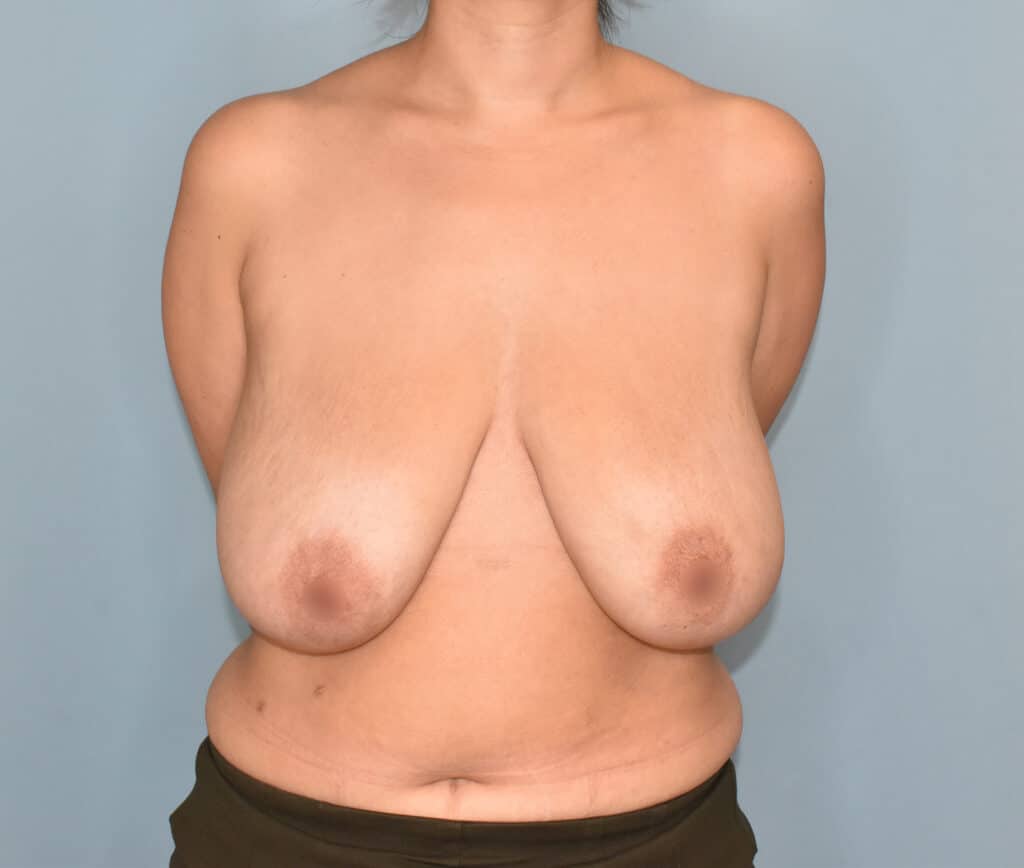
Before
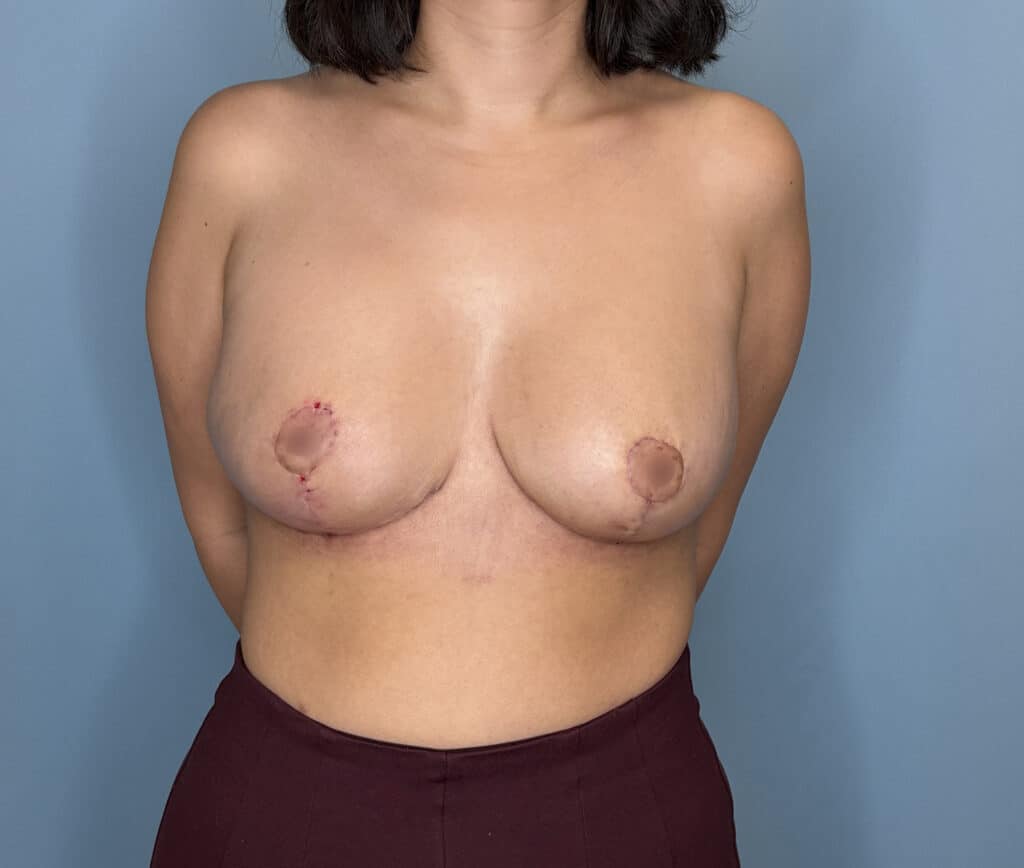
After